The Legacy We Design: Flooring Sustainability Summit Takeaways
By Kali Pharand
Some experiences stay with you long after the event ends. After returning home from the third annual Flooring Sustainability Summit, I found myself replaying the conversations, ideas, and connections that shaped the week. More than anything, the Summit left me with something I don’t often make time for: the urge to stop, reflect, and write.
So, I did.
There are few moments when the pace of work slows enough to reflect, and for me, that moment came after returning home from the third annual Flooring Sustainability Summit. Sitting on my couch with a cup of tea, the windows open, and the 154th Open Championship playing quietly in the background, I found myself revisiting the conversations, presentations, and relationships that defined the week. As someone with a degree in English and a lifelong passion for writing, I realized how rarely I allow myself the time to simply process an experience before moving on to the next project.
This year's Summit left me wanting to write.
From the keynote speakers and moderators to the panelists, breakout sessions, and conversations that continued long after the presentations ended, the event was filled with people who genuinely care about the future of our industry. Their enthusiasm wasn't performative; it was authentic. Throughout the week, I was reminded that while spirited debate is inevitable, particularly when developing industry standards, the flooring and sustainability communities remain remarkably united by a shared purpose. That collective commitment to improving the built environment was evident in every discussion. For architects and designers, collaboration across the entire value chain is critical. The decisions made by manufacturers, designers, specifiers, and owners are interconnected, and progress depends on continued dialogue among all stakeholders.
That level of engagement doesn't happen by chance. It is the result of years of vision, persistence, and unwavering commitment. Under the leadership of the Summit Chairman, Bill Griese, the Flooring Sustainability Summit has grown from an ambitious idea into one of the industry's most meaningful forums for collaboration. Bringing together manufacturers, architects, designers, contractors, academics, and sustainability leaders required more than careful planning: it required a belief that meaningful progress begins when people with diverse perspectives are willing to sit at the same table.
Throughout the week, that vision was evident. The Summit wasn't simply a series of presentations; it was an environment intentionally designed to foster dialogue, challenge conventional thinking, and encourage collaboration across the entire flooring value chain. From the keynote stage to the conversations that continued over coffee and tea, lunch, and evening receptions, every interaction reinforced the same message: advancing sustainability is not the responsibility of one organization or one discipline. It is a collective effort.
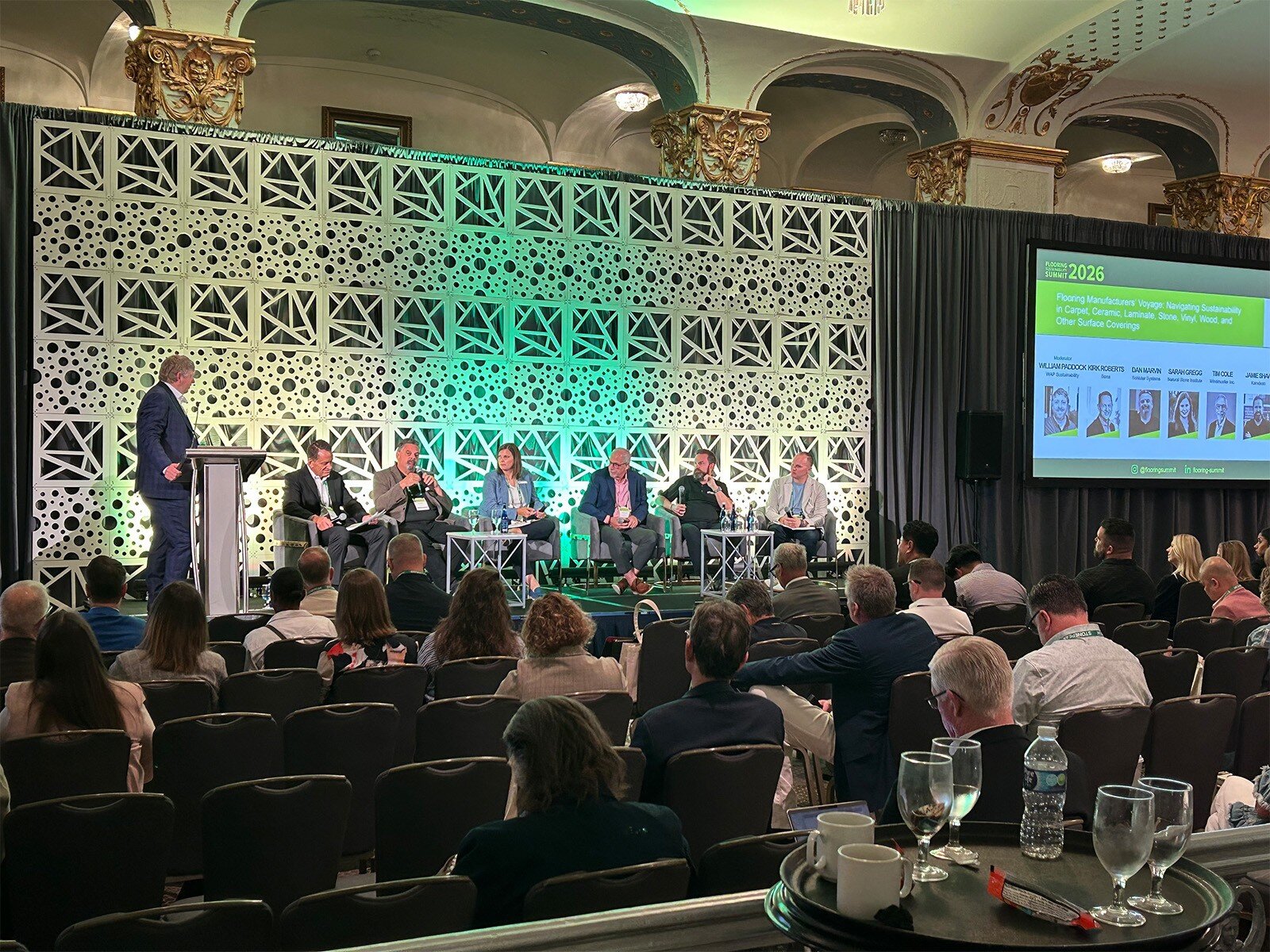
I'll admit that at previous conferences, my attention occasionally wandered. I found myself thinking about the evening's dinner plans, whether I had packed the right outfit, or how much time I might squeeze in for the gym before the next event. This year was different. Every session offered a meaningful insight or practical takeaway that I wanted to capture before it slipped away. The presentations weren't simply informative; they were memorable because they connected technical topics with the human experiences that give them purpose.
The opening and closing keynote addresses were especially impactful.
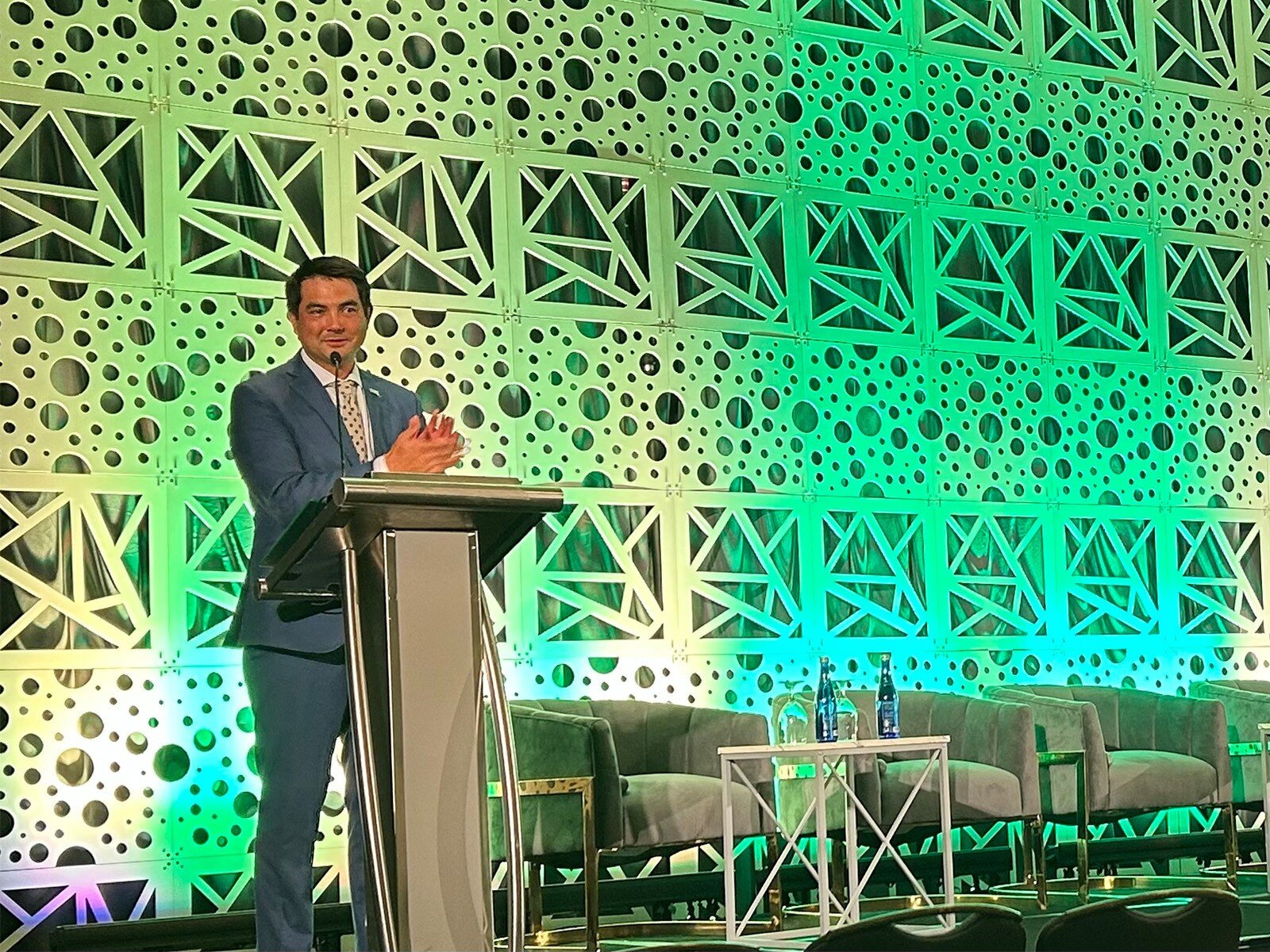
George Bandy challenged attendees to think beyond products and projects, encouraging us to consider the legacy we leave through the people we influence and the decisions we make. His message reinforced that sustainability is ultimately about stewardship: not only of natural resources, but also of one another. He instilled in his audience, at least for me, the theory that design decisions are legacy decisions and that buildings influence behavior and experiences. He drove home the concept that sustainability is not only about reducing harm but creating positive impact.
Closing keynote speaker Cheryl Durst brought that idea full circle through storytelling. Reflecting on her years as an English teacher, she shared the story of a young student who struggled academically until his desk was moved closer to a window where natural daylight transformed his ability to learn and engage. It was a simple adjustment with a profound impact, illustrating how thoughtfully designed spaces have the power to change lives. Durst expressed that the built environment shapes human outcomes, and the belief that daylight, wellness, and occupant experience are central design considerations. She reinforced the idea that even small interventions can have profound impacts.
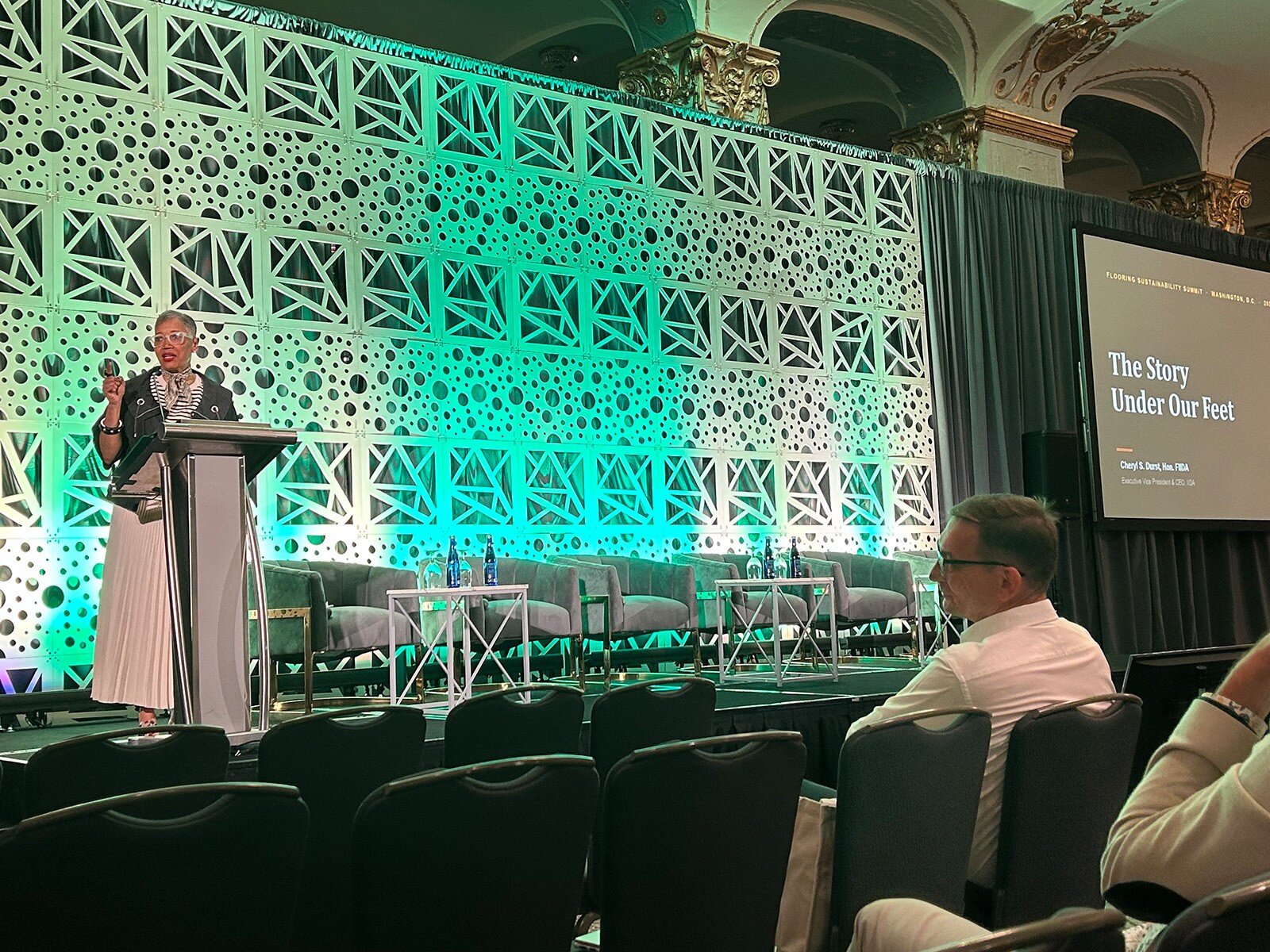
Durst’s story, specifically, resonated deeply, both personally and professionally. I've come to recognize that I do my best thinking when I'm outdoors or surrounded by natural light. Those environments foster my creativity, sharpen my focus, and help me be more present – not only in my work, but also in my roles as a wife, mother, and advocate for healthier buildings. I have experienced firsthand how our surroundings influence our mood, productivity, and overall well-being. Whether in my professional environment or at home with my family, spaces filled with natural light and connection to the outdoors allow us to feel more energized, focused, and connected.

For an industry dedicated to shaping the built environment, perhaps that is the most important reminder of all: sustainability isn't measured solely through environmental metrics or certifications. It is reflected in the lasting impact our spaces have on the people who inhabit them every day.
As I returned home and settled back into my daily routine, I found myself returning to the same thought. Sustainability is, at its core, about creating environments where people can thrive. The materials we select, the standards we develop, and the spaces we design influence how people learn, work, heal, connect, and live. Long after a project is completed, those decisions continue to shape experiences, improve well-being, and leave a legacy that extends far beyond the walls of a building.